

The Influence of Spiral Flow
Efficient Water Mixing Systems Inspired by Nature
The Engineering Problem
In fluid engineering, the problem of efficient mixing may not be as easy as it seems. Traditional systems rely heavily on mechanical agitators, which increases energy consumption, maintenance requirements, and overall system complexity. A more graceful solution is found in the study of a simple, but mighty natural phenomenon—spiral flow.
Learning from Nature
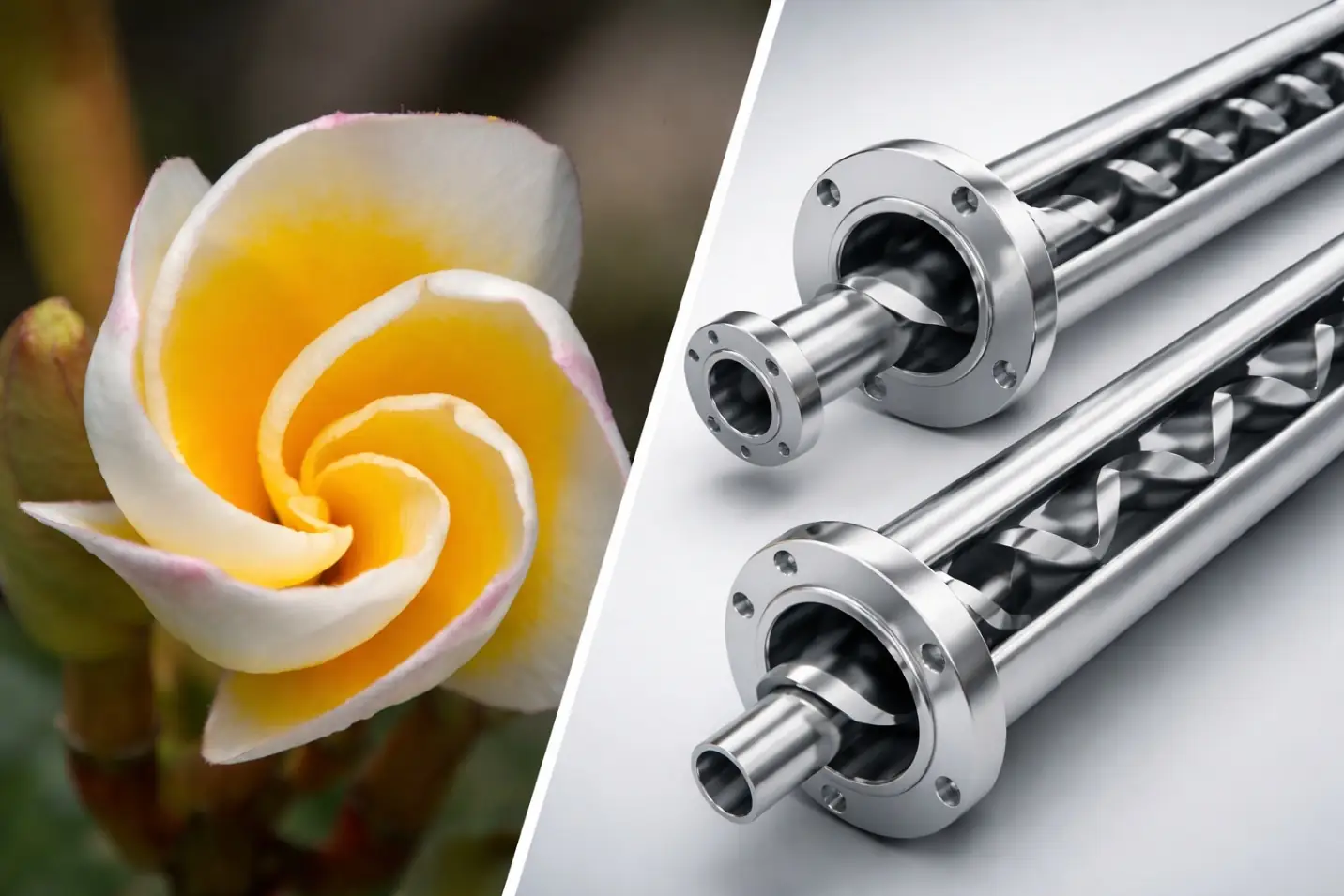
Spiral and vortex flow patterns are everywhere in nature, from river whirlpools to the helical form of a DNA strand. These shapes are never arbitrary; they represent highly efficient methods of energy transport and material distribution. By creating intrinsic continuous movement in multiple directions, spiral flow ensures fluid particles are constantly rearranged for quicker, more even mixing without excessive external force.
Concept: Static Mixers
Inspired by these natural patterns, engineers developed spiral-based static mixers. Unlike conventional systems, these have no moving components. Instead, they use internal helical features installed directly inside a pipe to manipulate the fluid.
- Flow is recombined, rotated, and split repeatedly.
- Layers are stretched and folded over each other.
- Controlled turbulence is generated efficiently.
- Results in a homogeneous mixture with minimal energy.
Key Advantages
Energy Efficiency
Eliminates motors and external agitation, drastically cutting power use.
Low Maintenance
No moving parts means minimal wear and tear and increased system life.
Consistency
Guarantees constant and predictable quality in the mixing process.
Compact
Installed directly into pipelines to save space and simplify layout.
Harnessing the Power of Flow
The principle of spiral flow proves that engineering and nature are deeply intertwined. By examining natural patterns, contemporary engineering can develop systems that are both efficient and sustainable. In water mixing, the answer wasn't more power—it was better flow.