
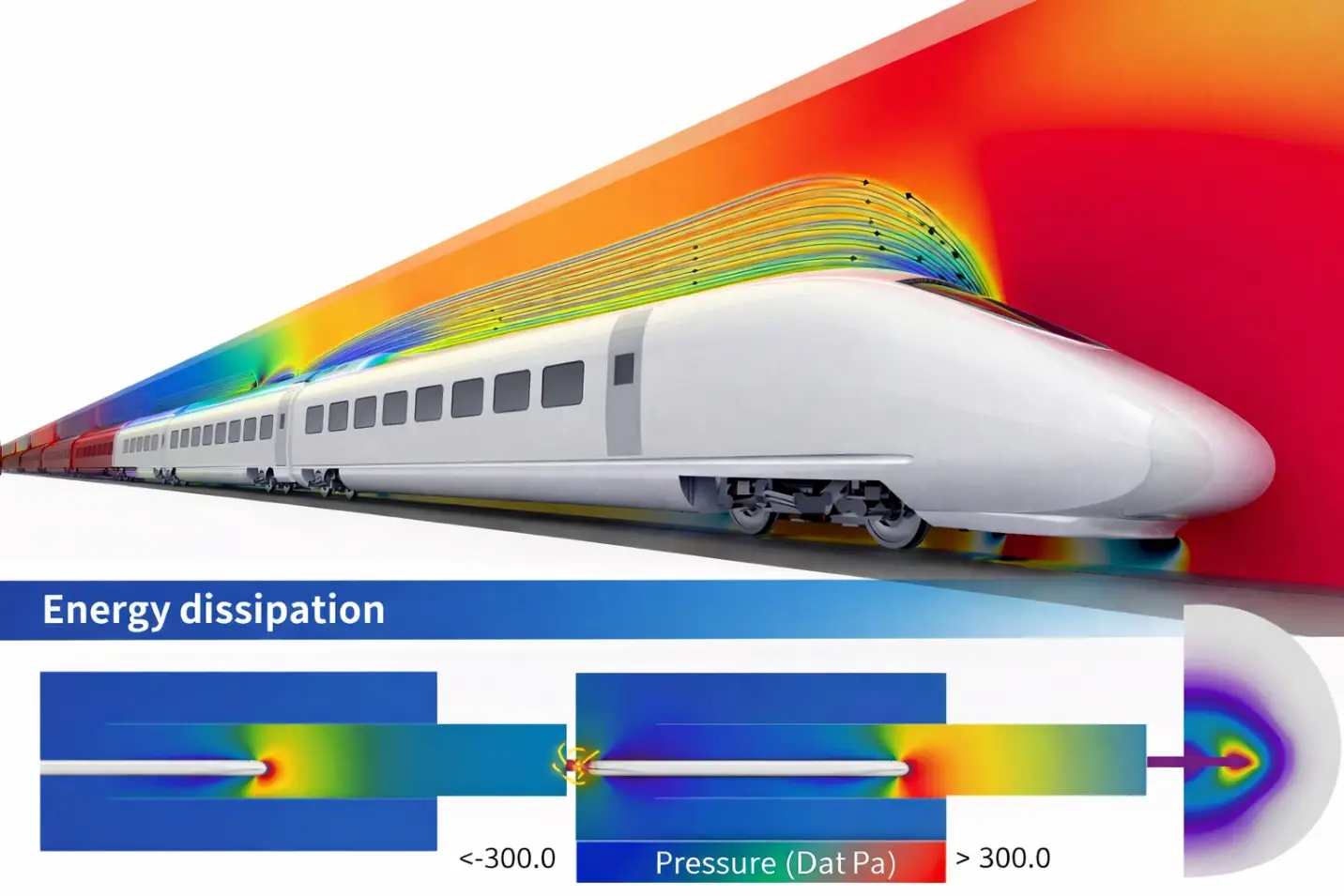

How Simulation Shaped the Aerodynamic Excellence of the Bullet Train of Japan
The article How Simulation Shaped the Aerodynamic Excellence of the Bullet Train of Japan narrates about simulation and its influence on the excellence in aerodynamics of the Japanese Bullet Train. The history of the Shinkansen of Japan is not merely a history of velocity--it is a history of accuracy engineered by simulation.

The Engineering Challenge
As early high-speed trains had to enter tunnels with a very high speed, they generated instant pressure wave. This resulted in:
- Sonic booms at tunnel exits (loud)
- Increased aerodynamic drag
- Energy inefficiencies
This behavior could not be fully predicted or optimized by traditional testing. The engineers required a more in depth knowledge of airflow.
Role of Simulation
Engineers were able to recreate real-life conditions in a virtual setting with the help of Computational Fluid Dynamics (CFD). The simulation enabled them to:
- Imagine the streamlines of airflow around the train
- Determine pressure points and dissipation points
- Experiment with the movement of air as the train moves into and out of tunnels
They were able to trial-and-error designs much faster and more precisely.
Problem to Breakthrough
The simulation outcome showed a crucial observation- acute pressure differences were the cause of the noise and inefficiency. Through optimization of the nose geometry of the train:
- The airflow was more continuous and smooth
- There was a reduction in pressure waves
- The turbulent energy losses were reduced
This resulted in the lengthy nose shape that is iconic with modern trains in the Shinkansen.
Power, Endurance, and Speed
Aerodynamics was not the only area of simulation. It also assisted engineers to:
- Analyze high speed structural loads
- Predict material fatigue over long-term operation
- Make it sustainable in the face of changing environmental factors
The train was optimized in both performance and reliability by optimization of aerodynamic and structural simulations.
Engineering Insight
Foresight was the actual benefit of simulation in this case. Engineers were able to anticipate issues prior to their happening and test solutions without having to construct numerous prototypes. This approach reduced development time, lowered cost of physical testing, and provided a more polished and trustworthy design.
Conclusion
A good example of the way simulation is changing engineering is the Shinkansen. It helps to bridge the gap between the concept and the reality, and this helps engineers to design confidently. Simulation is not an option anymore, but part of high-performance systems where accuracy is important.